The case for research
Research is the cheapest way to not build the wrong thing.
Most teams file user research under "nice to have." The evidence — and the biggest names in tech — say it's the highest-leverage money in the building. Here's the case, in plain terms, with the receipts. Even if you've never quite known what a UX researcher does, start here.
"We don't have budget for research" is almost always the wrong frame.
- You're already paying for research — by building, shipping, and finding out after the fact, when changing anything costs many times more.
- The only real question: spend it before you build, or after — with a quarter and the team's morale on the line.
- Done right, research isn't the expense. It's the discount.
The same move, at companies you know
A forced "Register" step before checkout was killing first-time buyers. Research swapped it for a "Continue" button. +45% conversions, +$300M in the first year. One label, found by watching real users.
Jared Spool / Center Centre ↗An engineer's idea sat shelved for months until someone finally A/B-tested it: combine the ad's second line into the headline. +12% revenue — ~$100M a year from a change nobody thought was worth building.
Harvard Business Review ↗Amazon tested deliberately slowing pages: every 100ms of delay cost ~1% of sales. Google found half a second of added latency dropped search traffic 20%. The detail you can't feel, abandoning carts at scale.
Greg Linden (Amazon) / Google ↗Early on, the founders suspected bad listing photos — not pricing — were the real barrier. They went door to door shooting professional photos. The insight became a program that still lifts bookings ~19% and host earnings ~21%.
Airbnb ↗What a UX researcher actually does
Usability testing is one tool inside it. The job is bigger: making sure effort lands on the right problem.
But that's just my opinion, right?
This isn't a matter of opinion
Decades of study across business and product converge on the same finding: teams that take user understanding seriously outperform the ones that don't — and most of what gets built is never even used.
higher revenue growth over five years at the most design-led companies — and 56 pts higher shareholder returns. Across medtech, consumer goods, and retail banking.
McKinsey — The Business Value of Design ↗of features in the average software product are rarely or never used — an estimated $29.5B in cloud R&D spent on things nobody touches.
Pendo — 2019 Feature Adoption Report ↗the cost of fixing a problem after launch versus catching it during design. The longer a wrong assumption survives, the more it costs to undo.
Nielsen Norman Group — Usability ROI ↗A quarter-century of Nielsen Norman Group keeps landing on the same point
NN/g has been running the numbers longer than almost anyone — and the takeaway is blunt: a little structured research, early, catches most of what would otherwise cost you later.
average improvement in the target metric after teams redesign around usability — measured across 99 real case studies over 14 years of NN/g data.
Nielsen Norman Group — UX Metrics & ROI ↗of a product's usability problems are exposed by testing with just five users — you don't need a big, expensive study to find what's actually broken.
Jakob Nielsen — Nielsen Norman Group ↗Translation: the cheapest study you'll ever run still catches most of the problem. Skipping it is the expensive choice.
I didn't make this up — I stand on the field's best
A short, curated list of the people and ideas I actually draw on. Read top to bottom, they tell one story: find the assumption a bet depends on, and test it before it gets expensive.
The cheapest study still catches most of the problem. Rigor isn't a budget line item.
Research is a practical team sport — not ceremony you bolt on at the end to feel safe.
The facts you need aren't in the conference room — they're with the people you're building for.
Treat every plan as a stack of assumptions, and learn which are true before betting the quarter on them.
Map the assumptions a bet depends on, then test the riskiest first. The de-risk discipline in one field guide — and the closest thing there is to my own operating manual.
Make discovery a weekly habit, not a phase — and tie every idea back to a real, observed opportunity.
The biggest risk isn't building it wrong — it's building something nobody wants. Discovery is how you find out first.
Why you watch what people do, not just what they say — the gap between the two is where the money quietly leaks.
Same through-line as everything I ship: the riskiest assumption, found and tested while it's still cheap.
Theory's cheap. Does any of it pay?
What it's looked like when it was me asking
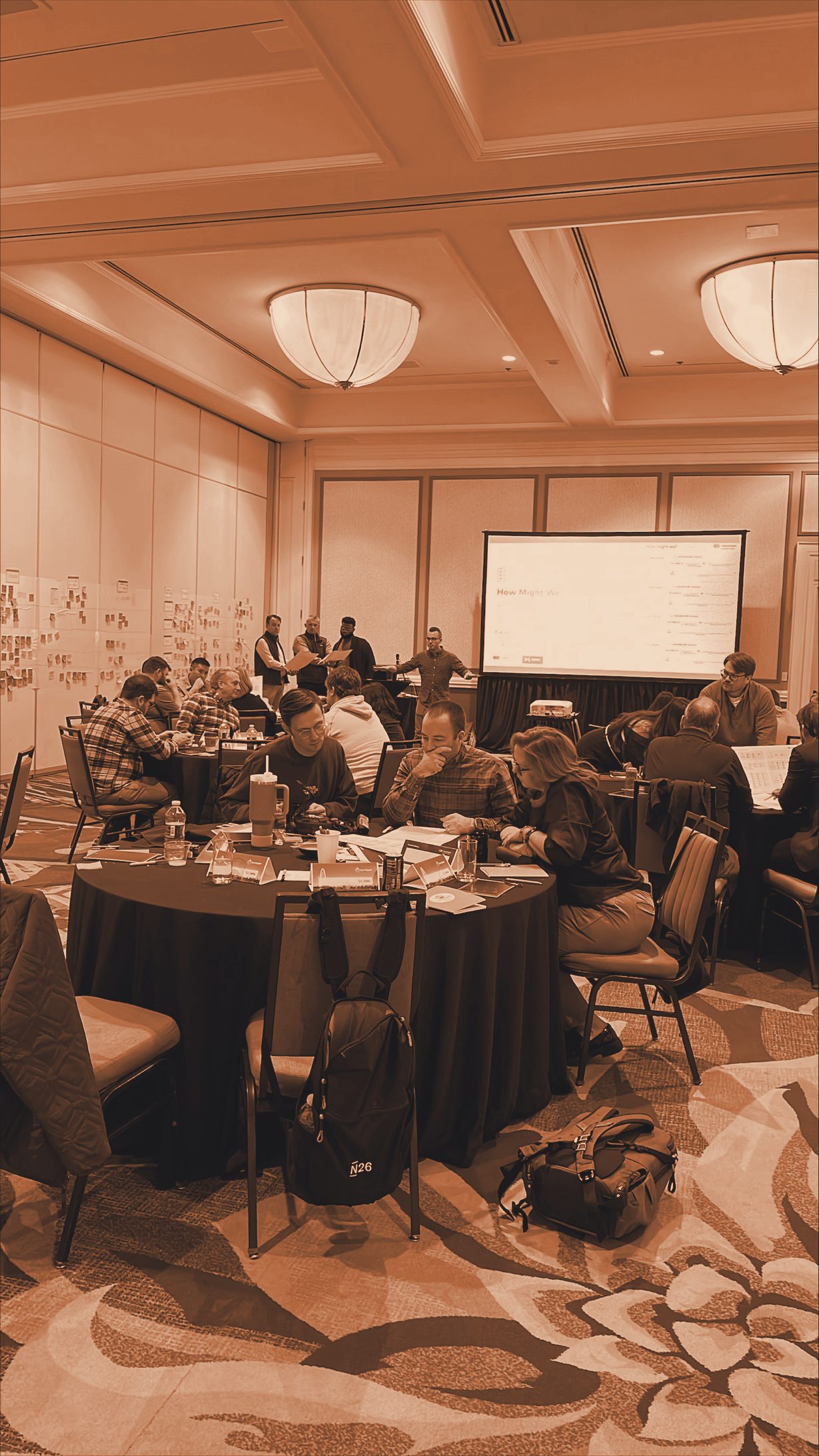
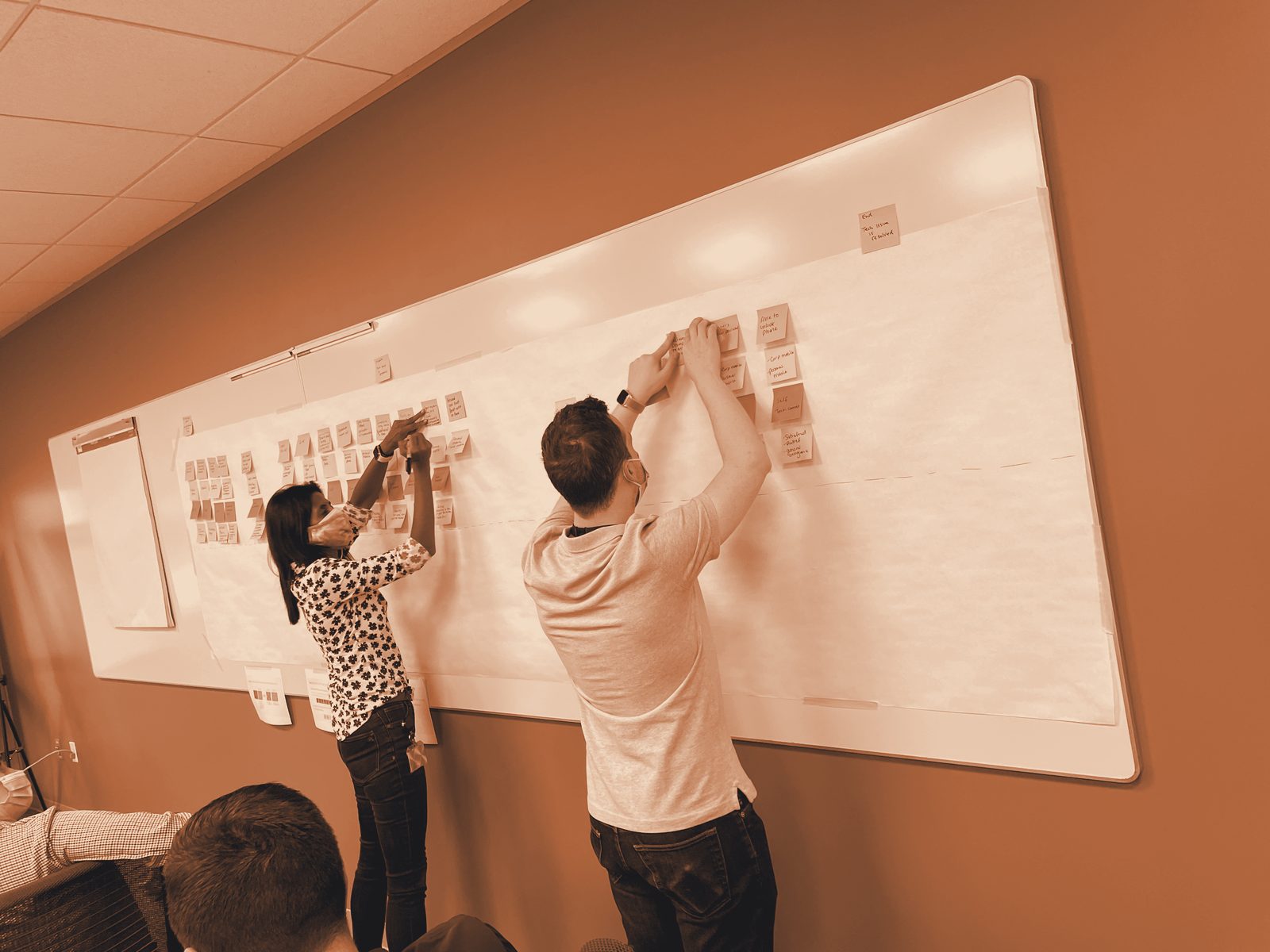
The case studies above prove the discipline. These are mine — the same work, in rooms I was in. Real metrics; client specifics kept confidential.
user satisfaction on a U.S. Treasury banking platform for the underbanked — with an estimated $1B+ in taxpayer savings over a decade
market opened by a first-of-its-kind concept built from the ground up through research and a structured innovation sprint
UX studies across 14 years at Fortune 500 scale — payments, lending, benefits, and enterprise tools